


The Stories We Omit
Updated: Oct 4
Aisha Sarwari
Reflections on the work of Asher Imtiaz, Pakistani-born, US-based visual artist whose practice explores migration, belonging and the ethics of seeing.
The scar is where the light comes from, after all—Rumi.
Asher Imtiaz could be the love son of every counter-culture artist who ever pointed a lens at the wrong side of power. He is a portrait and documentary photographer. He lives in Milwaukee. He came to America in 2012 to study computer science; he stayed for something else entirely.
Photography found him sideways. It tends to find people that way—not as a plan but as a compulsion. Once it has you, the code compiles differently. You stop seeing systems. You start seeing faces.
The Christian in the Muslim Country
Imtiaz grew up in Pakistan. He grew up Christian. In a country that writes its Muslim identity into the constitution, that is not a neutral fact. It is a condition. Pakistan defines its place in the world, in part, by defining its non-Muslims—and it does so with an uncomfortable precision.
He knows what it is to be at the margins of your own birthplace. To be technically present and structurally invisible. His first bodies of work were shot there— portraits of Pakistan’s religious minority communities. Their faces. Their faith. Their daily acts of quiet insistence on existing.
It was, if you squint at it, a form of autobiography. He was documenting people who had learned to live in the gap between what the state says you are and what you know yourself to be.
That gap followed him to America.
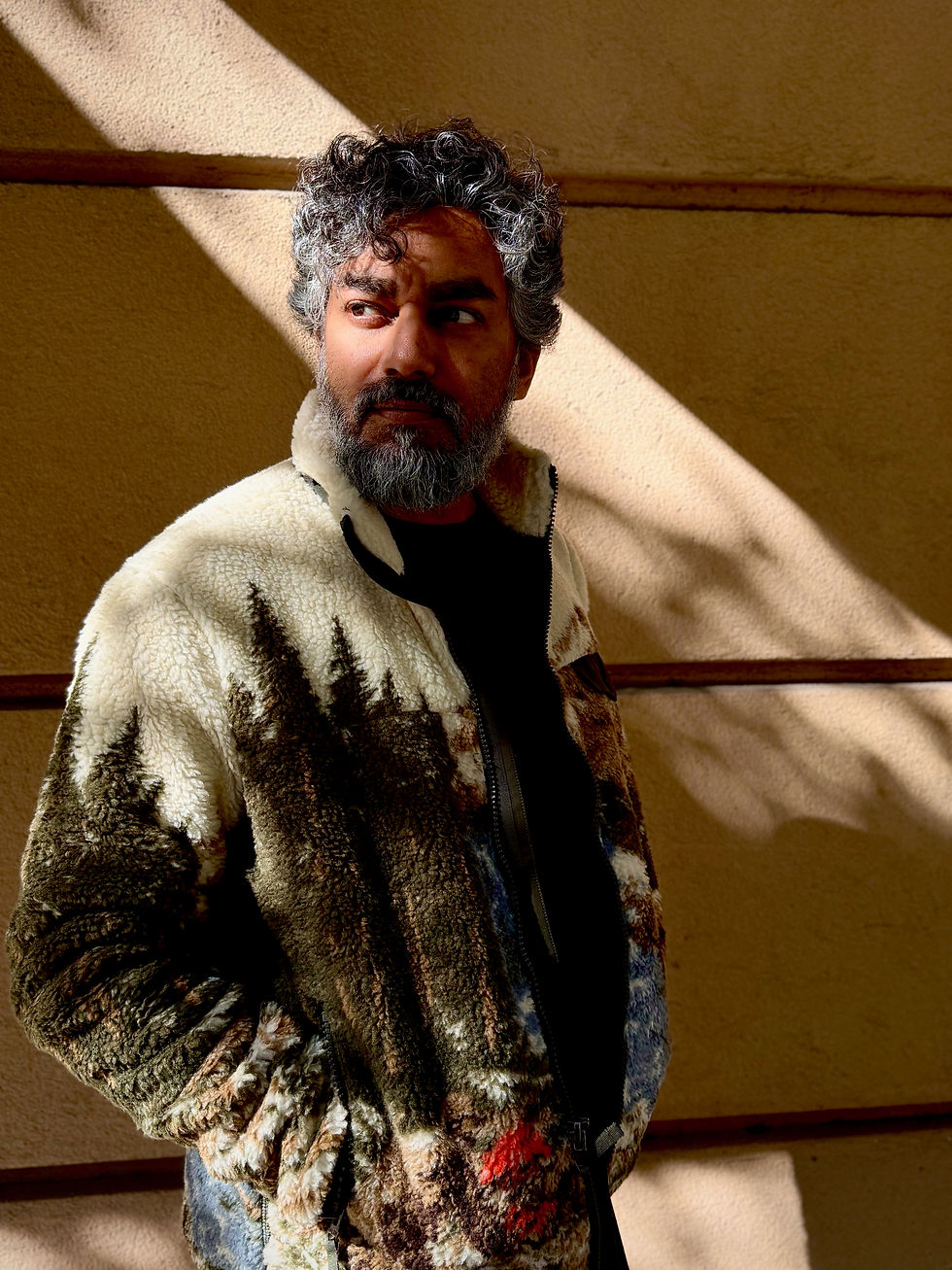
A Computer Scientist Who Chose to See
He moved to the United States for graduate school. Computer science. He is still, technically, a technology person—he has spent years working full-time at tech companies while making photographs on vacation days, pouring nights and weekends into a body of work that now fills museum walls.
That is not a small thing. That is a life arranged around a refusal. The refusal to do only the thing the market asked of him.
He settled in Wisconsin in 2016. He redirected the camera. Not toward Pakistan’s margins this time, but America’s. Refugees. Asylum seekers. Migrant workers. The newest arrivals to the oldest American story: you are welcome until you are not, and the line moves without warning.
His method is not to arrive and shoot. It is to arrive and wait. To listen before he looks. “Only through careful attention,” he has said, “can photographers engage and build the trust necessary to produce intimate portraits.” The emotions he captures are unguarded because they are earned, not ambushed.
The Visual Grammar
Technically, Imtiaz is a man haunted by cinema as much as photography. His shadows are dramatic. His vertical lines are stark. The contrast in his work traces back to German Expressionist film—that post-war tradition of using darkness to speak about dislocation, of making the frame itself feel unstable.
There is nothing accidental about this. His subjects exist at their own rupture. The visual language matches.

But his work is not hopeless. That is the thing about it. The darkness is always in conversation with light. He has named the tradition he works in himself: he sees his photographs not as windows—things you look through at a safe distance—but as mirrors. You look into them and find yourself. Or you should. That is the challenge he is issuing.
The great American documentary photographers Lewis Hine and Dorothea Lange photographed people the powerful wanted to ignore. Their images became evidence. Argument. History. Imtiaz is working in that lineage, but he is doing something slightly different. He is not only documenting. He is insisting on reflection.
42 States and a List of So-Called Shitholes
His subjects span an unofficial America. Indigenous peoples. The Gulf Coast. The Amish. New Orleans in purple bows. Children. Farmhands going home in the late sun. Forgotten asylum seekers. He has crossed 42 states making this work.
When “shithole countries” became a phrase American politicians used without embarrassment, Imtiaz took the list and booked flights. Burundi. Haiti. Mali. Congo. He went not as a disaster tourist. He went as a witness. Someone had to.
“Whatever defined American pride—birthright law, asylum seekers, the melting pot—is now suddenly something to roll back and then be proud of the rollback,” he has said. The photographs are his answer to that. They do not argue. They simply show.
Outside the frame of the work, he also volunteers. He helps settle international students in Milwaukee. The practice extends beyond the camera. This is the ethos made literal: if no one welcomes you, you become the welcome.
Mirrors, Not Windows: The Show
In August 2024, Imtiaz’s first solo museum exhibition opened at the Museum of Wisconsin Art in West Bend, Wisconsin. Thirty works. Four months. A long time coming.
He named it ‘Mirrors, Not Windows’. The title does the argument plainly. A window keeps you separate. A mirror makes you complicit. These are not photographs of immigrants for a comfortable non-immigrant audience to feel things about. They are photographs that hold a mirror up and ask: where do you see yourself in this?

The compositions are not loud. That is what makes them hard to shake. They are quiet in the way that precision is quiet. Each image sits at the point where past and present collide—where someone is both the person they were and the person this country is making them become.
“Imtiaz’s photographs are both emotionally and intellectually engaging,” said Anwar Floyd-Pruitt, MOWA’s Curator of Contemporary Art. What that observation is really saying: the work refuses to let you feel without thinking, or think without feeling. Both things happen at once. You are not allowed to be a clean spectator.
For a man who spent years building this body of work on stolen time—vacation days, early mornings, sacrificed weekends—the museum walls were not an arrival. They were a vindication.
One Portrait
One image stops me every time.
It is from his series on gun violence. Specifically, his portraits of women whose daughters were shot while pregnant. The subject is an elderly black woman. She looks to her side. Gaze down. An oxygen tube runs soft plastic around her nose, curves around her ears, falls down her neck in the shape of a bejeweled Y, follows into an off-scene cylinder giving her the life force she may or may not want.
Two tears in each eye. One is still moving, bent in time. The earlier pair is stuck between her cheek and the translucent tube. The light makes the tears concave. That is craft. The fact that she let him be there—that is character. Hers and his.

No one can cry like that, can permit tears to fall off the cliff of a lifetime of defeat, while someone with a camera witnesses the wreckage. Something has to be given. Something has to be trusted. The image is a record of that transaction.
Viktor Frankl wrote about the space between stimulus and response—that invisible gap where freedom lives. Where choice lives. Where the self refuses to be entirely broken by what breaks it. Imtiaz’s shutter finds that gap. He locks it in. Here is a woman in the aftermath of the worst losses a human being can hold, and she is still choosing to be seen. That is not passivity. That is a declaration.
Imtiaz calls this series God at ‘I’ Level. His belief: to photograph one person as a force made in the image of God is enough to encompass all of humanity. The title is the thesis. The photographs are the proof.
I have looked at this portrait more times than I can count. I have reached out, mentally, to place my palm on her cheek. Careful not to disrupt the time-space dimension she is holding together. No white supremacist playbook, no executive order, no geopolitical fantasy has an answer for this single image. It is simply larger than all of that.
What the Camera Refuses to Look Away From
In Pakistan, Imtiaz played cricket. When he got opponents out, he heard them mocked: “Now even a [Christian] will get you out of a game.” In America, someone broke his camera in a café and called him a slur for Muslim. Two countries. Same lesson. You are tolerated until you become inconvenient. He responded by becoming someone who looks. Directly. Without flinching. This is a Declaration of Independence. The act of holding a gaze, of making someone be seen on their own terms, is a sword. Not raised in anger. Raised in refusal.
The prerequisites for this kind of work are not technical. Show up. Look. Do not brace yourself. Stay long enough that the defenses come down. Check your privilege like a coat at the door. Leave your phone in your pocket—the 1990s version, the one that could not record anything. Each crack in the world, kintsugi teaches us, is where the gold goes in. Imtiaz fills the cracks with light. He fills them with faces.
History without pictures is Cliff Notes on the wonders of the world. Imtiaz is making sure we have the pictures. All 42 states and beyond. The tube-bound woman looking sideways. The Burundian family in Tucson. The farmhand walking home.
Tomorrow she will be seen. Your gaze may not even be necessary then.
Right now, it is.
The piece was updated to remove 'Chile' from the list of countries Imtiaz travelled to.
Notes on the photographs:
All photos courtesy of the author. Photos by Asher Imtiaz, unless stated otherwise.
‘Blerta’ is from Mirrors, Not Windows, a portrait series on refugees, asylum seekers, migrant workers, and immigrants in the United States, exhibited as Asher Imtiaz’s first museum solo show at the Museum of Wisconsin Art.
‘Carrie’ is from The Presence of Absence, a series on women, grief, and the afterlives of gun violence in America.

Aisha Sarwari is an author, a public speaker, and the co-founder of the NGO Women’s Advancement Hub. Her opinions have appeared in The Economist, The Guardian, The Atlanta Journal Constitution, Dawn, The Express Tribune, the BBC, and NPR. She focuses on the gendered aspects of migration, belonging and caregiving. Her third book, Heart Tantrums and Brain Tumors, was published by Penguin (2023). She had a 20-year career as a global leader in corporate communications. She tweets @AishaFSarwari.


Comments